
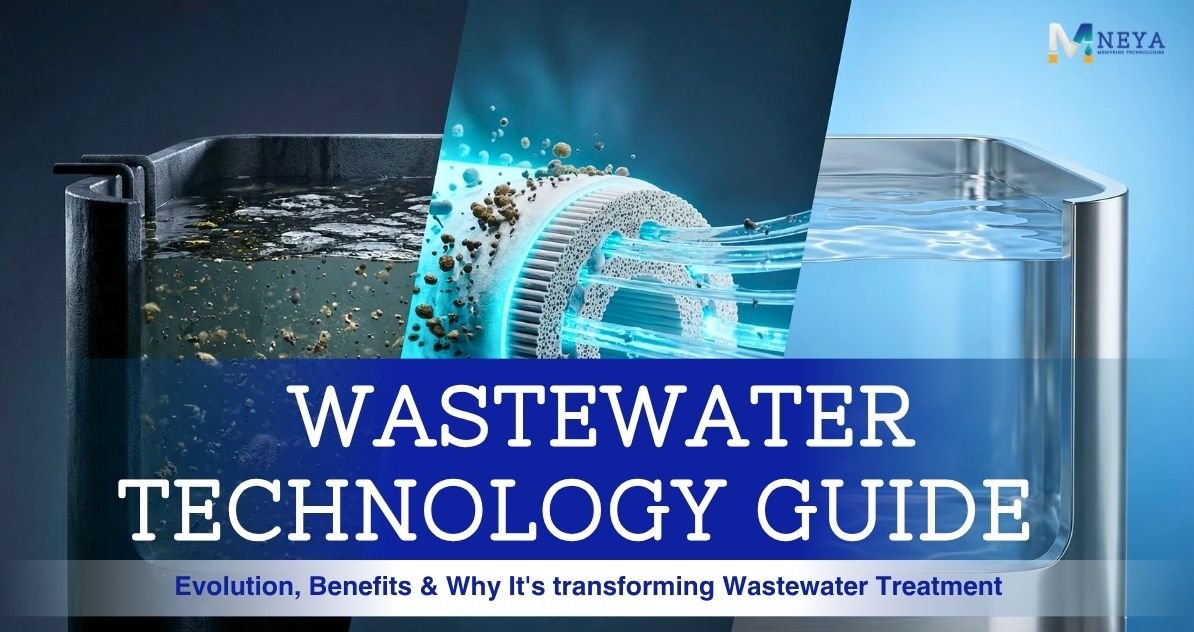
The Growing Challenge of Wastewater Treatment
Somewhere between a drought declaration and a freshwater crisis, engineers quietly began asking a question that would reshape the future of water infrastructure: what if we stopped thinking of wastewater as waste?
It is a question born out of necessity. According to the United Nations, over two billion people currently live in countries experiencing high water stress. Rapid urbanization, industrial growth and climate variability are placing unprecedented strain on freshwater resources worldwide. Meanwhile, the volume of wastewater being generated from cities, hospitals, food processing facilities, textile plants and pharmaceutical manufacturers continues to climb.
The old model of treating water and discharging it into rivers or ocean outfalls is no longer a viable strategy. What industries and municipalities need today is a treatment technology that does more: smaller physical footprint, higher effluent quality and treated water that can be safely recycled back into industrial processes or non-potable end uses.
This is precisely where Membrane Bioreactor (MBR) technology has emerged as one of the most consequential advances in modern wastewater treatment engineering. In the past two decades, MBR systems have evolved from expensive pilot projects into mainstream treatment plants across major industries and societies, as they are both technically compelling and economically sound.
Want to understand how MBR reached this point? Let’s take a closer look at the path that led here.
What Is an MBR Membrane?
At its core, a Membrane Bioreactor (MBR) is an advanced wastewater treatment system that combines biological treatment with membrane filtration in a single, integrated process.
In conventional biological treatment, microorganisms break down dissolved organic contaminants in wastewater. The treated effluent is then sent to a secondary clarifier, a large settling tank where gravity separates the biological sludge from the clarified water. This process has worked reasonably well for decades, but it has inherent limitations: settling performance is variable, the clarified water still contains fine solids and pathogens and the clarifiers themselves demand significant land area.
MBR eliminates the secondary clarifier entirely. Instead, it replaces the gravity separation step with membrane filtration, typically hollow fiber or flat sheet ultrafiltration membranes with pore sizes in the range of 0.03 to 0.4 microns. These membranes act as an absolute physical barrier, preventing bacteria, suspended solids and most pathogens from passing through into the treated water stream.
How MBR Works — The Core Process: Raw wastewater enters the bioreactor, where a dense population of microorganisms (biomass) degrades organic matter and nutrients. The mixed liquor, the combination of wastewater and biological sludge is then drawn through the membrane modules by applied suction (in submerged systems) or pressure (in side-stream configurations). The membranes allow only treated water to pass, retaining all biomass and solids within the bioreactor. This produces a high-clarity effluent with very low turbidity, low BOD and COD and significantly reduced microbial load. |
The result is treated effluent that meets or exceeds the standards required for industrial water reuse, landscape irrigation, toilet flushing, cooling tower makeup and in many regions, indirect potable reuse applications.
What makes MBR particularly powerful is the synergy between biology and filtration. The membrane retains the biomass inside the reactor, allowing the system to maintain a much higher Mixed Liquor Suspended Solids (MLSS) concentration typically between 8,000 and 12,000 mg/L, compared to 2,000–4,000 mg/L in conventional activated sludge systems. Higher MLSS means more biological activity per unit volume, which translates directly into a more compact reactor footprint.
The Evolution of Wastewater Treatment Technologies
To appreciate what MBR technology delivers, one must trace the lineage of biological wastewater treatment to a story of incremental engineering improvements, each generation solving the limitations of the last.
1. Activated Sludge Process (ASP) — The Foundation
Developed in the early 20th century, the Activated Sludge Process was a revolutionary concept for its time. Wastewater is mixed with a suspension of active microorganisms in an aeration basin. The biological community metabolizes organic pollutants, reducing BOD and COD to acceptable discharge levels.
But ASP has known limitations that have never been fully overcome:
- It requires large secondary clarifiers for biomass separation, demanding significant land area.
- Sludge settling performance is sensitive to filamentous bacteria overgrowth, toxicity shocks and seasonal temperature changes.
- Effluent quality can fluctuate and the treated water typically still contains fine suspended solids and coliform organisms.
- The system struggles under high hydraulic or organic load variability.
For decades, ASP was the workhorse of municipal wastewater treatment. In many plants, it still is but its constraints created an engineering imperative: find something better.
2. Sequencing Batch Reactor (SBR) — Operational Flexibility
The Sequencing Batch Reactor was the first significant evolution beyond conventional ASP. Rather than treating wastewater in a continuous flow-through process, SBR systems treat it in sequential batches filling, reacting, settling, decanting and idling in the same tank.
This approach gave operators more control over reaction time and sludge management and eliminated the need for a separate clarifier by using the same tank for both treatment and settling. For smaller municipal plants and certain industrial applications, SBR offered a genuinely practical improvement.
However, SBR systems still depend on gravity settling for biomass separation. During the settle-and-decant phase, the system cannot accept influent creating operational dead time and limiting continuous treatment capacity. Effluent quality, while improved over ASP, remains vulnerable to settling upsets and the systems require careful sequencing management to perform consistently.
3. Moving Bed Biofilm Reactor (MBBR) — Biomass Density Without Settling
MBBR technology introduced a fundamentally different approach to biomass retention. Rather than relying on suspended floc that must settle out of solution, MBBR systems grow biological communities on plastic carrier media small, buoyant polyethylene carriers that move freely through the reactor under aeration.
The biofilm that colonizes these carriers can sustain much higher biomass concentrations than suspended growth systems, improving treatment efficiency per unit volume. MBBR became particularly popular for retrofitting existing plants to increase capacity without expanding the physical footprint.
The limitation is post-treatment: MBBR effluent still contains suspended solids, biofilm fragments and biological material that must be removed by downstream clarification or filtration before the water can be discharged or reused. In effect, MBBR improved the biological treatment step considerably, but left the separation challenge unsolved.
4. Membrane Bioreactor (MBR) — The Convergence of Biology and Filtration
MBR technology arrived as the logical convergence of two mature disciplines: biological wastewater treatment and membrane filtration. By integrating the membrane separation step directly into the bioreactor, MBR systems eliminated the need for secondary clarification entirely while simultaneously upgrading effluent quality to a level no previous biological technology could consistently achieve.
The MBR did not simply iterate on its predecessors; it restructured the fundamental architecture of biological treatment. The membrane became the separation mechanism, the biomass retention mechanism and the quality barrier all at once. And because the membrane retains essentially all suspended solids regardless of sludge settleability, MBR performance is far more robust and predictable than any gravity-based separation technology.
Key Benefits of MBR Technology
Superior Effluent Quality
MBR systems consistently produce treated water with turbidity below 0.2 NTU, BOD under 5 mg/L and TSS near zero. This level of quality is not achievable through gravity-based biological treatment without additional polishing steps. For industries where effluent must meet stringent reuse standards pharmaceuticals, electronics manufacturing and food processing MBR provides a reliable pathway to compliance.
Compact Footprint
By operating at MLSS concentrations of 8,000–12,000 mg/L (versus 2,000–4,000 mg/L in conventional technologies), Membrane bioreactors can process significantly higher organic loads per unit volume. Combined with the elimination of secondary clarifiers, MBR plants can reduce the overall treatment footprint by 30–50% compared to ASP, SBR and MBBR technologies. This is a decisive advantage for urban industrial facilities, land-constrained municipalities and offshore or space-limited installations.
High MLSS Concentration and Biological Efficiency
Higher biomass concentration means greater biological diversity and treatment capacity within the same reactor volume. This makes MBR systems particularly resilient to shock loads, sudden spikes in influent flow or organic strength that would destabilize conventional systems. Industrial wastewater plants, where influent quality can vary dramatically across shifts, benefit significantly from this stability.
Excellent Pathogen Removal
The 0.03–0.04 micron membrane pore size physically excludes bacteria, protozoa and most viruses from the treated effluent. This makes MBR one of the few biological treatment technologies that achieves meaningful pathogen removal through the primary treatment mechanism itself, rather than relying entirely on downstream disinfection. In water reuse applications, this inherent barrier function provides an additional layer of public health protection.
Reuse-Ready Treated Water
Perhaps the most strategically important benefit of MBR technology in the current wastewater management environment is the quality of its output. MBR effluent typically requires only disinfection (UV or chlorination) before being suitable for a wide range of non-potable reuse applications including cooling tower makeup, boiler feed pre-treatment, process water, toilet flushing and landscape irrigation. In regions of water scarcity, this creates a compelling economic and sustainability case for MBR adoption.
Stable Operation Under Variable Loads
Unlike gravity clarification, which requires sludge to be settleable to function, membrane separation performance is largely independent of sludge settleability. MBR systems maintain consistent effluent quality even when influent characteristics fluctuate a common reality in industrial settings where production schedules, raw materials or seasonal inputs create variability in the wastewater stream.
Simplified Plant Layout and Reduced Civil Works
Fewer treatment units mean fewer civil structures, smaller site area, reduced piping complexity and simplified operational monitoring requirements. For new treatment plant projects, this can translate into meaningful capital cost reductions and faster construction timelines.
MBR vs. ASP, SBR and MBBR: Why the Industry Is Shifting
| Parameter | ASP | SBR | MBBR | MBR |
|---|---|---|---|---|
| Effluent Quality | Moderate | Good | Good | Excellent |
| Footprint | Large | Medium | Medium | Compact |
| Secondary Clarifier | Required | Not Required | Required | Not Required |
| MLSS (mg/L) | 2,000–4,000 | 2,000–4,000 | 2,000–4,000 | 8,000–12,000 |
| Pathogen Removal | Moderate | Moderate | Moderate | Superior |
| Water Reuse Ready | No | Partial | Partial | Yes |
| Load Fluctuation Tolerance | Low | Medium | Medium | Very High |
What the comparison table communicates clearly is that MBR does not merely improve upon one parameter it advances performance across every critical metric simultaneously. The elimination of secondary clarifiers alone reduces plant complexity and capital cost for clarifier structures. The effluent quality advantage opens doors to water reuse that no other biological treatment technology can match without extensive post-treatment polishing.
For engineering procurement and construction (EPC) firms evaluating technology options for new treatment plants or plant upgrades, the question is no longer whether MBR can deliver superior results; the global evidence base is unambiguous on that front. The engineering conversation has shifted to optimizing membrane selection, managing membrane fouling through aeration and cleaning protocols and designing systems that balance capital efficiency with long-term operational cost.
The Future of Wastewater Treatment: Membranes at the Center
The trajectory of wastewater treatment technology is pointing in one direction: tighter effluent standards, greater emphasis on water reuse, smaller plant footprints and smarter operational management. MBR technology is positioned at the intersection of all four trends.
Regulatory frameworks in Europe, the Middle East, Asia and increasingly in North America are tightening discharge standards to levels that conventional biological treatment cannot consistently achieve without advanced post-treatment. MBR systems, producing effluent already at tertiary quality from the primary treatment step, offer a structural compliance advantage that will only grow in value as standards continue to tighten.
The water reuse imperative driven by scarcity, industrial sustainability targets and urban water policy is creating entirely new demand for MBR-treated effluent as a reliable alternative water source. Industrial parks in water-stressed regions of the Middle East, Southeast Asia and Southern Europe are increasingly designing their wastewater treatment infrastructure around MBR technology specifically because of its reuse-ready output.
On the technology development front, ongoing advances in membrane materials science are improving fouling resistance and extending membrane service life, gradually reducing the operational cost disadvantage that MBR systems have historically carried compared to conventional activated sludge. The integration of MBR with upstream pre-treatment innovations fine screening, dissolved air flotation and advanced primary treatment is further optimizing performance across a wider range of influent quality profiles.
The integration of digital monitoring and process control into MBR operations is also creating opportunities for predictive membrane maintenance, energy optimization through real-time aeration control and remote operational management aligning MBR systems with the broader digital transformation of industrial water management.
Looking Forward Membrane Bioreactor technology represents the clearest available pathway to wastewater treatment that is simultaneously high-quality, compact, water reuse-ready and adaptable to the variable demands of modern industrial and municipal applications. For plant operators, EPC consultants and environmental engineers evaluating treatment technology for new projects or existing plant upgrades, MBR deserves serious consideration — not as the premium option, but as the technically sound baseline against which other technologies should be measured. |
The question the industry asked quietly at the start of the wastewater reuse revolution, what if we stopped thinking of wastewater as waste? now has a credible, scalable and commercially proven answer. Membrane Bioreactor technology is not the future of wastewater treatment. In a growing number of the world’s most demanding industrial and community treatment applications, it is already the present.

Your Wastewater Challenge
Deserves a Membrane
Built to Solve It.
From selecting the right membrane configuration to commissioning a fully operational MBR plant — Neya Memveins engineers walk with you through every step.