High-Performance MBR Membranes for the Food Processing Industry
Engineered in Ahmedabad, Neya Memveins' reinforced PVDF hollow fiber membranes transform high-BOD food factory wastewater into pure, recycled water - guaranteeing compliance, ZLD support and up to 98% water recovery.
Critical Wastewater Challenges in Food Manufacturing
Food processing effluents are heavily loaded with organic matter, fats and washing chemicals. Traditional treatment systems face continuous upsets due to these complex wastewater characteristics.
High BOD & COD
Sugars, starches and proteins load the effluent with massive biological and chemical oxygen demands, leading to standard system overloads.
Oils, Fats & Grease (FOG)
Fats and lipids from snack, dairy and meat processing block filtration mediums and coat biological sludge, causing bio-system failures.
Seasonal Fluctuations
Fruit and vegetable processing facilities run campaigns that create huge volumetric spikes and concentration shifts within weeks.
Cleaning Chemicals
Daily hygiene and CIP (Clean-In-Place) procedures discharge sanitizers, acids and alkalis, causing drastic biological toxicity spikes.
Why Conventional Wastewater Systems Fail Food Plants
Traditional effluent treatment plants (Activated Sludge, SBR, MBBR and Clarifiers) struggle to meet modern recycling standards under high-strength food wastewater loads.
Technical Bottleneck Comparison
The Farm-To-Factory-To-Reuse Water Journey
MBR-Based Food Processing ETP Flow Scheme
Below is the process flow diagram detailing the treatment path from Raw Food Processing Effluent to utility reuse and ZLD.
Raw Food Effluent
Washing, processing, cooking and equipment sanitation.Coarse Screen
Effluent pooling and removal of coarse solids and peelings.Oil & Grease Trap
Separates free-floating vegetable oils and animal fats (FOG).Equalization Tank
Buffers flow rate, pH, temperature and organic shock loads via aeration.pH Correction
Doses acid or alkali to neutralize alkaline CIP chemical dumps.Flash Mixer
Rapidly mixes coagulants to destabilize colloidal proteins and fats.Flocculation Tank
Polymers agglomerate small particles into larger, separable flocs.Primary Clarifier / DAF
Floats or settles coagulated fats, oils, grease (FOG) and suspended solids.Anoxic Tank
Facilitates denitrification by converting nitrate nitrogen to nitrogen gas.Aeration Tank
Activated aerobic biomass digests dissolved sugars, starches and organic loads.MBR Membrane Tank
Neya PVDF hollow fiber membranes separate biomass, yielding clean filtrate.Permeate Tank
Holds treated water for Gardening, Utility, Floor Washing and Cooling.RO System (Optional)
Polishing Reverse Osmosis removes dissolved salts for boiler/process feed.Process Reuse / ZLD
Achieves Zero Liquid Discharge by recycling 100% back to utility.Engineered Benefits of Neya MBR Technology
Achieve clean environmental metrics, protect downstream equipment and dramatically reduce municipal freshwater reliance.
Complete TSS & Turbidity Removal
Absolute 0.03-micron membrane barrier filters out all suspended solids, yielding crystal-clear filtrate with zero TSS (TSS ~ 0 mg/L) and turbidity below 0.2 NTU.
Ultra-Compact Footprint
Operating at elevated biomass limits (MLSS >8,000 mg/L) reduces required tank sizing. No secondary settling clarifiers are needed.
Low Sludge Yield
A high mean cell residence time (MCRT) allows bacteria to consume their own biomass, slashing bio-sludge volumes by up to 50%.
Tailored Solutions Across the Food & Beverage Spectrum
Each food processing sector produces wastewater with a unique chemical signature. Our reinforced MBR membranes are configured to match your specific organic load.


Smart Water Quality Dashboard
Compare raw wastewater influent values with treated effluent concentrations from conventional systems against Neya Memveins MBR. Select a sector below:
Beverage Plant Effluent
High sugar concentration, chemical cleaning and shifting volume batches.
The Neya Memveins Engineering Advantage
We do not just supply membranes; we engineer reliable biological separation assets designed to withstand the harsh environment of food effluents.
Made in India Manufacturer
Our state-of-the-art facility in Ahmedabad guarantees fast shipping, localized technical support and easy spare availability.
0.03 Micron Absolute Filtration
Microscopic pore size distribution blocks all suspended particles, bacteria, yeast and micro-plastics for high reuse safety.
Hydrophilic PVDF Fibers
Permanent surface treatment prevents fats, oils and greases (FOG) from adhering to the fiber wall, lengthening operational flux cycles.
Performance Metrics in Numbers
Neya Memveins' high capacity manufacturing and installations deliver massive operating savings across national and international food factories.
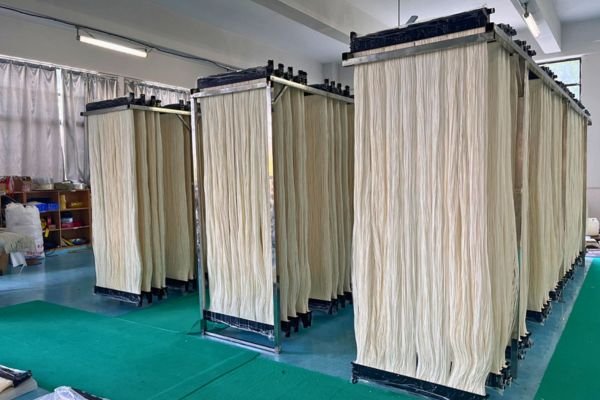
High-capacity automated manufacturing line in Gujarat.
Maximum conversion efficiency of processed wastewater.
Compact size cuts civil build, piping and setup costs.
Supplying leading food conglomerates and OEM systems.
Industrial MBR Membrane Modules
Explore our premium series of reinforced PVDF hollow fiber membrane modules designed specifically for heavy-duty food wastewater applications.
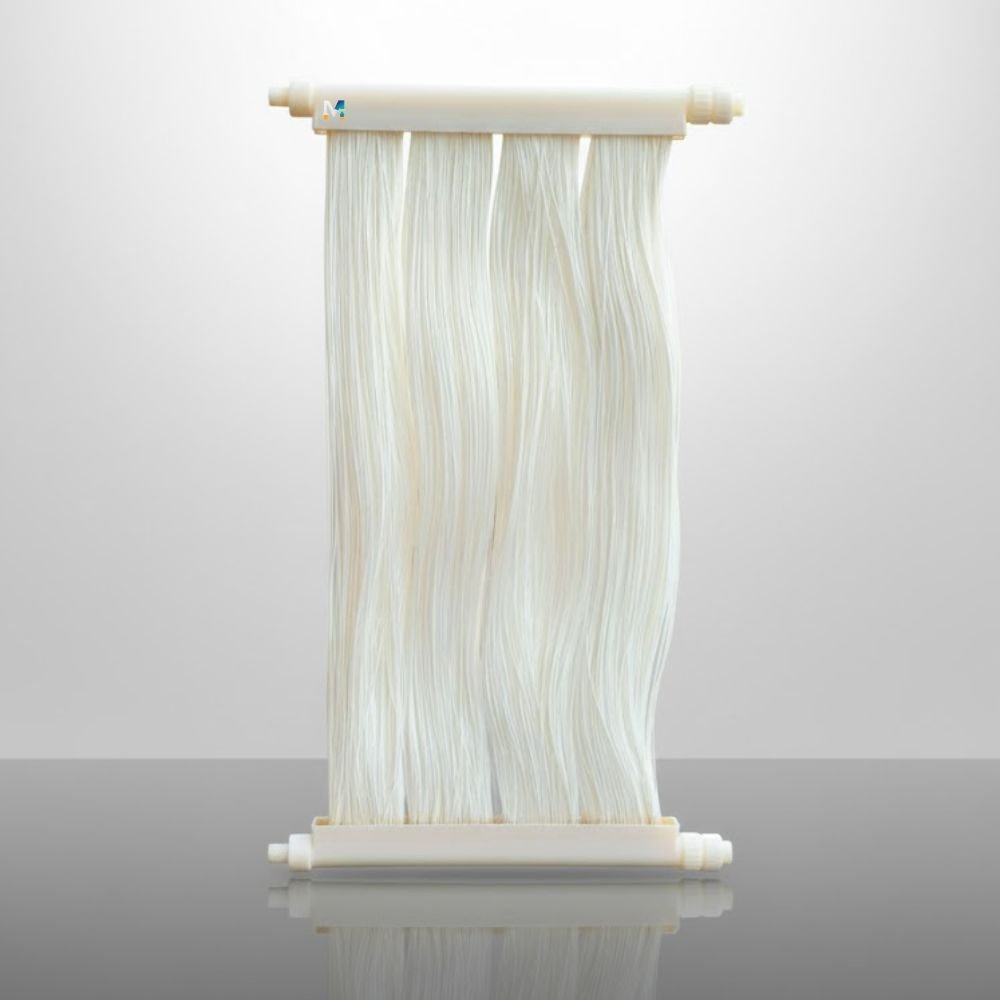
NMV Series Reinforced PVDF
The flagship series optimized for high organic strength biological filtration. Outfitted with permanent hydrophilic modification to resist grease adhesion.
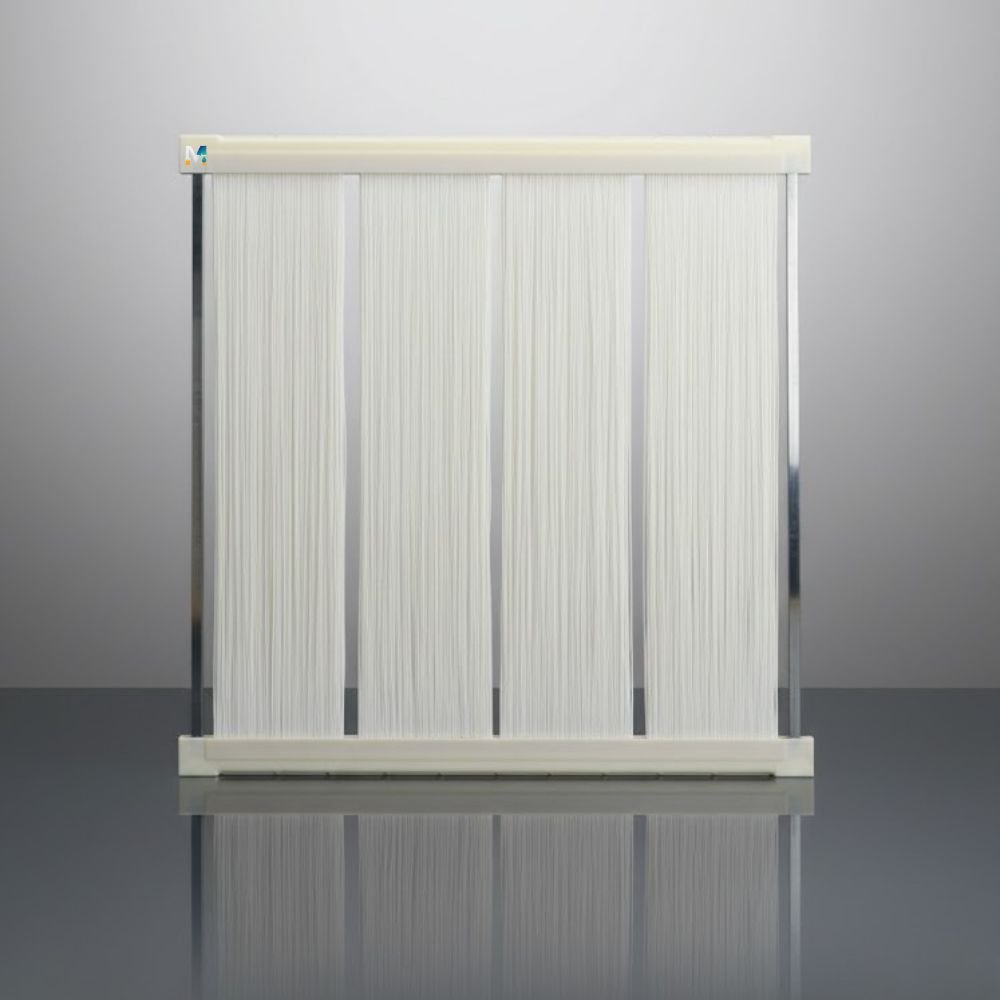
M Series Modular MBR
Specifically configured for containerized or packaged sewage and effluent treatment plants. Offers space optimization without sacrificing filtration flux.

D Series Double-Density
Engineered for heavy-duty food park central CETPs and starch production plants. Possesses elevated tolerance to organic solids and CIP chemicals.
Why Braided Reinforced PVDF Matters
Under intense organic loads and frequent chemical washing, traditional hollow fibers crack and break. Neya Memveins' reinforced PVDF cores guarantee structural longevity.
Braided Polyester Core
Every hollow fiber features an internal woven polyester support braid. This yields a tensile strength exceeding 200 N, preventing fiber breakage and eliminating bypass leaks.
High Chemical Resistance
PVDF stands up to concentrated chlorine (up to 1,000 mg/L contact) and acids used for deep Clean-in-Place (CIP) procedures to strip organic biofouling.
Permanent Hydrophilicity
Unlike standard PVDF which is hydrophobic and attracts lipids, our modified fibers maintain a protective film of water molecules, actively repelling grease and starches.
Hollow Fiber Core Structure
Interactive Water Savings & ROI Calculator
Calculate your annual water volume recovery, cost savings, project return-on-investment (ROI) and payback period by adjusting the operational inputs below.
Calculator Inputs
Annual Projections
Zero Liquid Discharge (ZLD) Retrofit Case Study
Read how a leading carbonated beverage plant in Western India upgraded their biological treatment plant with Neya MBR membranes to achieve ZLD compliance.
Central India Soft Drink Plant Upgrade
Project Overview & Solution
The Challenge: The facility operated a standard biological aeration tank followed by a secondary gravity clarifier and sand filters. High fluctuations in sugar concentration caused sludge bulking and frequent fines, leading to violations of local environmental limits. Water scarcity also limited production expansion.
The Neya Solution
The existing secondary clarifier was bypassed. An MBR membrane tank holding **Neya NMV-30** reinforced PVDF hollow fiber modules was retrofitted downstream of the aeration basin. The MLSS of the system was raised to 10,000 mg/L, doubling the organic load treatment capacity within the existing concrete footprint.
Results: The plant achieved absolute ZLD compliance. Filtered water was directed to cooling tower makeup and Reverse Osmosis (RO) feed.
Before vs After Water Comparison
What Our Industry Partners Say
We work closely with engineering consultants, OEMs and plant heads across India to guarantee operational reliability.
"Operating a potato chip plant involves massive starch fluctuations. The Neya Memveins hollow fiber modules have handled these peaks with zero fiber breakages over 4 years of continuous operation."
R. K. Sharma
Indore, Madhya Pradesh"As an EPC contractor, we need reliable suppliers. Neya's Ahmedabad plant provided prompt delivery and expert mechanical guidelines during the retrofitting of the juice plant ETP."
Amit Patel
Ahmedabad, Gujarat"The hydrophilic coating on Neya membranes has significantly reduced fat clogging. Our cleaning cycle has extended from weekly backwashing to once in three weeks."
Dr. S. Nair
Kochi, KeralaCertified Industrial Engineering Standards
Every Neya Memveins membrane module undergoes rigorous physical and pneumatic testing to confirm absolute pore consistency and tensile reliability.
ISO 9001:2015 Certified
Our manufacturing systems follow global standard quality management protocols to ensure zero defects.
Pore Size Testing
Laser diffraction analysis confirms our 0.03–0.04 micron membrane filtration pore density distribution.
Tensile Validation
Every batch of reinforced fiber undergoes stress pulling tests to verify tensile tolerance >200 N.
Bubble Point Test
Integrated air pressure tests verify that there are no pinholes in the module potting or membrane fibers.
Deep Technical Expertise in Wastewater
Neya Memveins Technologies brings years of industrial wastewater experience to the table. Our expert team of environmental engineers and polymer chemists specializes in solid-liquid separation.
Scientific R&D focus
We collaborate with Indian academic institutions to optimize polymer formulations, yielding superior fouling resistance under high fats and sugar loads.
Ahmedabad Fabrication Unit
Our fully local production lines minimize foreign supply chain dependencies, guaranteeing fast deliveries and absolute transparency during inspection audits.
Frequently Asked Questions
Find detailed answers to the 30 most common questions regarding food processing wastewater treatment, MBR installation and operational maintenance.
Transform Food processing Wastewater into a Valuable Resource
Achieve ZLD, guarantee compliance and cut your utility costs by partnering with India's leading MBR membrane manufacturer.
Neya Memveins Technologies Pvt. Ltd. | Ahmedabad, Gujarat, India