Reinforced PVDF MBR Membranes for Textile Wastewater Recycling
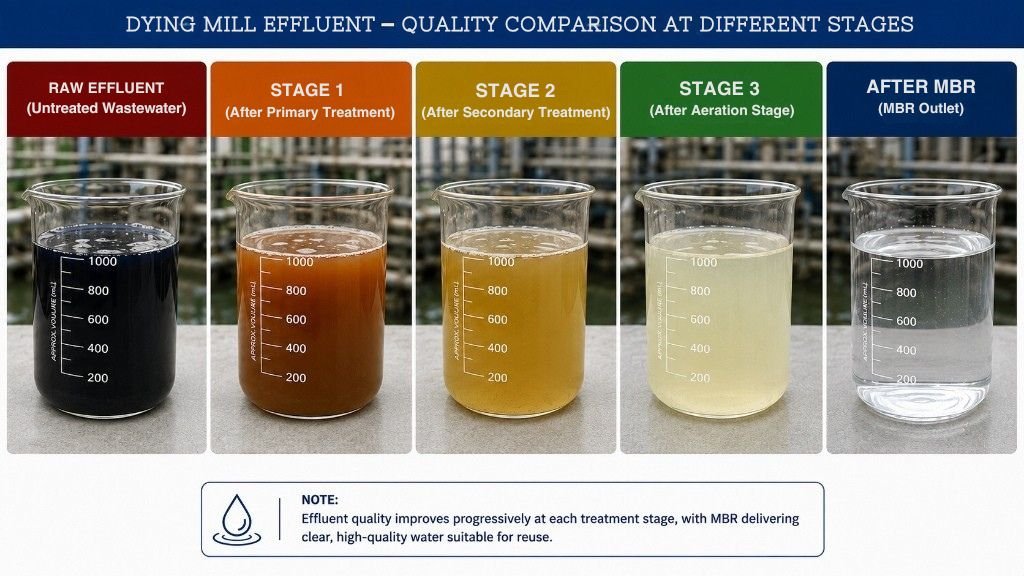
Followed by primary and secondary treatment, remove dye color, reduce COD and BOD levels by 95% and comply with wastewater discharge regulations. Built for Zero Liquid Discharge (ZLD) systems with a 0.03 micron filtration layer.
Textile Effluent Challenges
Textile dyeing and washing processes produce wastewater with high organic loads, chemicals and intense color. Standard treatment systems often struggle to meet strict discharge limits.
High Color & Dye Content
Reactive dyes dissolve easily in water and do not settle out in standard biological systems. This makes color removal difficult without advanced filtration.
High COD & BOD Levels
Sizing agents, starches and processing chemicals create high COD and BOD levels, overloading standard wastewater systems.
Chemical Pollutants
Surfactants, microplastics and heavy metals damage the bacteria in standard activated sludge systems and block downstream filters.
Government Compliance & Water Costs
Pollution control boards require Zero Liquid Discharge (ZLD). Recycled water helps mills avoid rising fresh water costs.
Why Gravity Clarifiers Fail in Textile Effluent Plants
Conventional ETPs use gravity to settle biological sludge in clarifiers. However, textile chemicals cause sludge bulking, preventing proper settling. This washes biological solids out of the tank and damages downstream Reverse Osmosis (RO) membranes.
Poor Sludge Settling
Chemical surfactants prevent sludge from settling, resulting in cloudy effluent water.
Large Space Required
Gravity clarifiers, sand filters and carbon filters take up significant factory land.
The MBR System
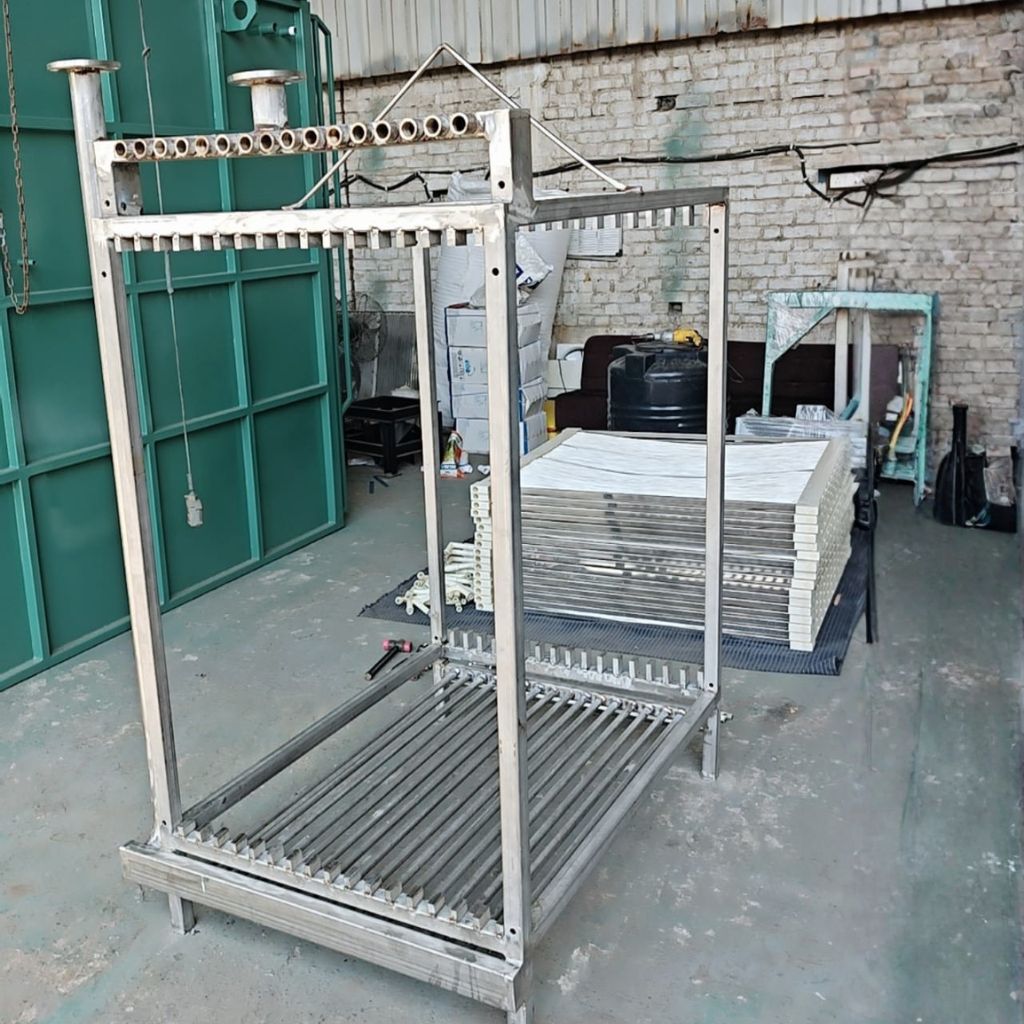
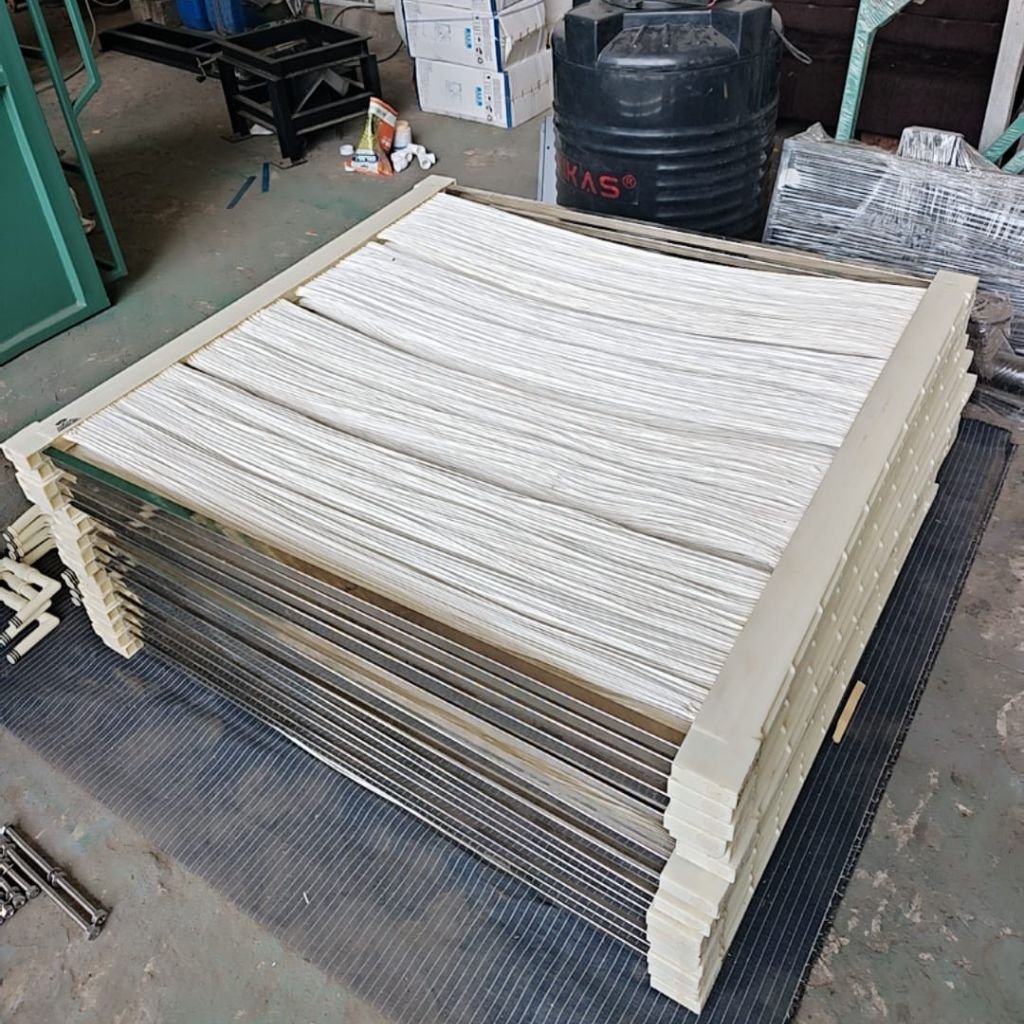
MBR replaces clarifiers and sand-carbon filters with a physical reinforced PVDF membrane barrier (0.03 micron). It filters out all suspended solids and allows operation at high biomass density (MLSS).
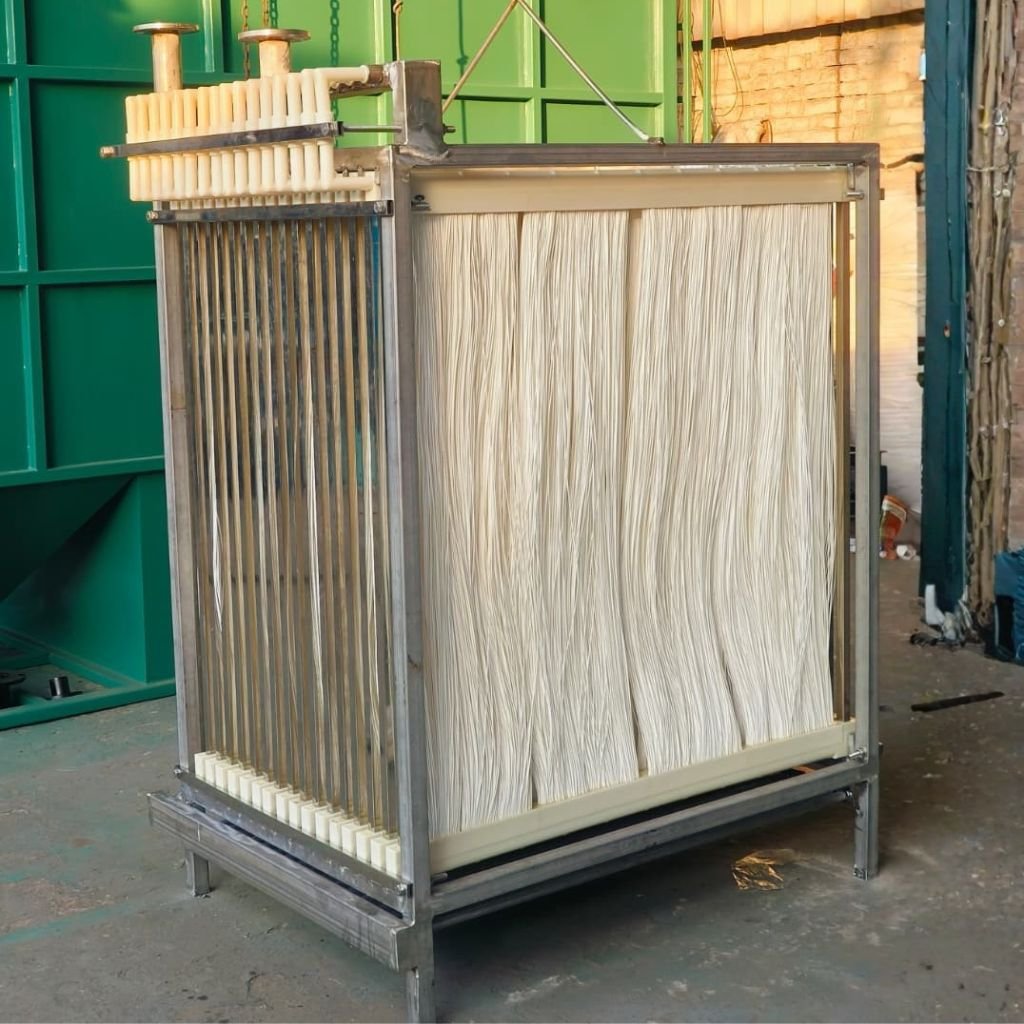
How MBR Wastewater Recycling Works
Step-by-step process of recycling textile effluent. Hover over any stage to view details.
Hover over any process stage above...
Hover over any process stage card in the diagram to view engineering details, chemical inputs and functions.
Key Benefits of MBR for Textile Mills
Technical advantages designed to reduce operating costs and improve water recycling rates.
Clear Filtered Water
Water turbidity stays below 0.2 NTU and Silt Density Index (SDI) under 3. This protects downstream RO membranes from fouling and extends their life.
High Biomass Density (MLSS)
Operates at sludge concentrations of 8,000 to 12,000 mg/L. This helps digest heavy organic loads and buffers incoming pollution shocks.
Saves Up to 60% Space
By eliminating clarifier tanks and sand filters, the system requires much less land area, saving space in your factory.
Solids & Dye Separation
Retains biological solids, microplastics and large dye molecules, preventing them from escaping into reuse lines.
Lower Sludge Production
Operating with a high sludge retention time (SRT) reduces excess sludge generation by 30% to 50%, lowering disposal costs.
Low Operating Costs (OPEX)
Air scouring nozzles use less energy, keeping electricity consumption below 1.1 kWh per cubic meter (kL) of recycled water.
Tailored for Every Textile Segment
Tested and validated under diverse manufacturing conditions.
Denim Processing
Removes heavy indigo dyes, pumice powder and microfibers for washing reuse loops.
Cotton & Yarn Dyeing
Tackles high salt effluents, hydrolysed dyes and complex chemical sizing agents.
Printing & Finishing
Handles pigments, gums and high molecular solvents, producing clear RO feed.
Synthetic & Blends
Filters microplastics, spinning oils and chemical surfactants with absolute retention.
Performance Comparison
Typical effluent values: Conventional activated sludge system (ETP) vs. Neya Memveins MBR system.
| Parameter | Raw Textile Effluent | Conventional Secondary ETP | Neya Memveins MBR System |
|---|---|---|---|
| BOD | 4,000 mg/L | 60–100 mg/L | <30 mg/L |
| COD | 8,000 mg/L | 400–500 mg/L | <250 mg/L |
| MLSS | N/A | 2,500–4,000 mg/L | 8,000–12,000 mg/L |
| Sludge Retention Time (SRT) | N/A | 8–20 Days | 25–60 Days |
| Operating Flux | N/A | N/A | 12–20 LMH |
| Transmembrane Pressure (TMP) | N/A | N/A | 0.1–0.35 Bar |
| Dissolved Oxygen (DO) | N/A | 2–4 mg/L | 2–3 mg/L |
| Operating pH | 6.5–9.5 | 6.5–8.5 | 6.5–8.5 |
| TSS | 1,200 mg/L | <100 mg/L | <5 mg/L |
| Turbidity | 800–1,000 NTU | 10–25 NTU | <1 NTU |
| Water Quality | Untreated | Suitable for Discharge | Suitable for RO Feed & Water Reuse |
Why ETP Contractors Choose Neya Memveins
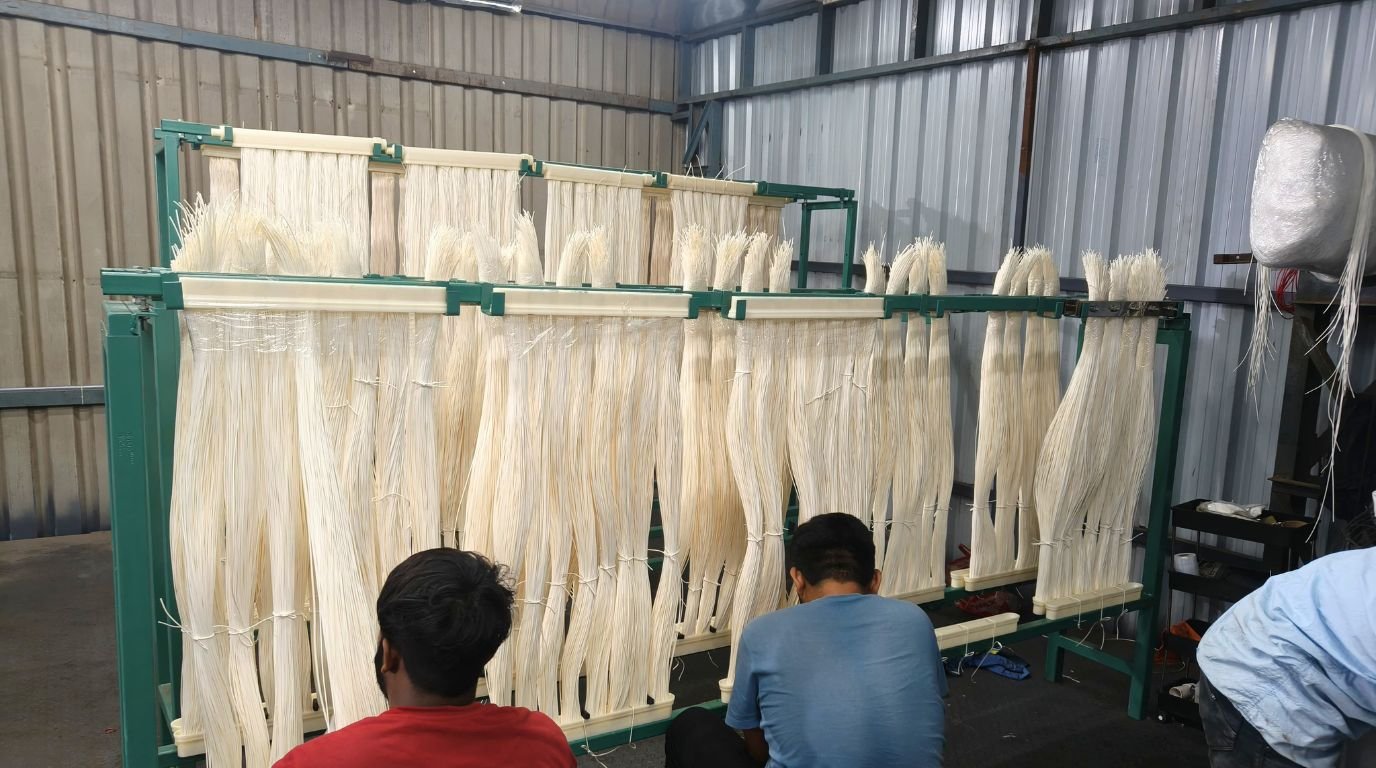
We manufacture reinforced PVDF hollow fiber MBR modules in Ahmedabad, India. Our membranes withstand chemical cleaning with acids and chlorine without breaking.
Inner braided core prevents fiber breakage during continuous air scouring.
Filters out bacteria, suspended solids and large organic dye molecules.
Fits directly into existing module frames and piping of other major brands.
Withstands chlorine up to 1,000,000 ppm-hours for effective chemical cleaning.
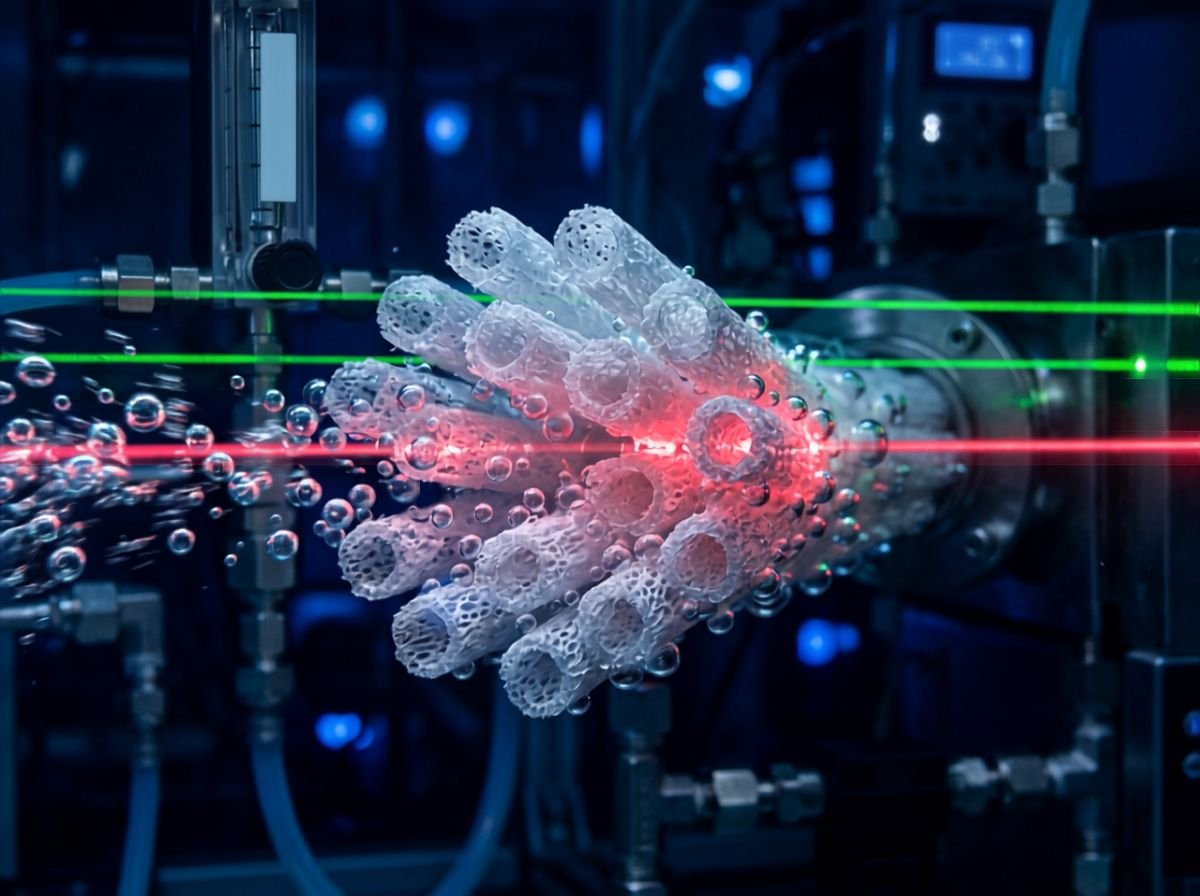
Serving Critical Industrial Verticals
Besides textiles, Neya Memveins membrane systems are trusted across demanding industrial wastewater applications globally.
3,50,000+
Annual Membrane Production (m²)
700+
Industrial Installations Globally
95%
Textile Water Recovery Potential
99.4%
Customer Satisfaction Score
Neya Memveins MBR Product Line
Standardized high-capacity reinforced PVDF modules designed to scale to any flow requirements.
NMV-20 Module
High-capacity modules designed specifically for heavy textile dyeing ETP retrofits.
- Surface Area: 20 m²
- Design Flux: 15 – 30 LMH
- Pore Size: 0.03 – 0.04 Micron
- Material: Reinforced PVDF
M-25 Module
Double density hollow fibers optimized for large footprint restrictions and maximum MLSS.
- Surface Area: 25 m²
- Design Flux: 15 – 30 LMH
- Pore Size: 0.03 – 0.04 Micron
- Material: Reinforced PVDF
D-40.9 Module
Compact modules designed for pilot testing, package STPs and batch industrial runs.
- Surface Area: 40.9 m²
- Design Flux: 15 – 30 LMH
- Pore Size: 0.03 – 0.04 Micron
- Material: Reinforced PVDF
Why Braid-Reinforced PVDF is Necessary
Standard unreinforced membranes can break due to mechanical stress from continuous air bubbles. If a fiber snaps, untreated sludge leaks into the clean water line, clogging downstream RO systems.
Neya Memveins hollow fibers have a strong inner braid covered by the PVDF filtration layer. This design handles up to 300 Newtons of pulling force, preventing snapping.
Good Water Flux
Even pore distribution allows high water flow rates at low suction pressure.
Chlorine Resistant
Resists chemical washes with chlorine and citric acid to easily clean off organic build-up.
Chemical Resistance Comparison
Calculate Your MBR Recycling ROI
Estimate your potential fresh water bill reduction and system payback timeline by switching to MBR.
System Parameters
Estimated Savings
Note: This calculator provides an estimated ROI based on the selected parameters. Actual savings may differ depending on site conditions, water quality, operating practices, maintenance costs, utility charges and overall system design.
Real-World Case Study
Read how a leading denim dyeing park in Ahmedabad retrofitted their conventional ETP with Neya Memveins MBR Modules.
Case Study: 800 KL Denim ETP Retrofit
A denim dye park suffered frequent biomass washouts in their gravity clarifiers due to starch sizing shocks and blue indigo dye toxicity. Permeate quality fluctuated and downstream RO membranes fouled every 4 weeks, resulting in massive operational downtime.
Retrofitted secondary clarifiers into a membrane tank housing **Neya Memveins MBR modules** sized for 800 KL capacity. Operating MLSS was increased from 3,000 mg/L to 10,000 mg/L and sand-carbon filtration was completely bypassed.
- Permeate turbidity fell below 0.15 NTU consistently.
- Downstream RO membrane lifespan extended from 4 weeks to 18+ months.
- Water recovery rate stabilized at 96% for direct reuse in printing.
COD (Chemical Oxygen Demand) Comparison
Trusted by Operations Teams
Hear from engineers and plant managers running Neya Memveins membrane modules.
"We replaced our imported MBR modules with Neya Memveins NMV-20 units. The mechanical braid reinforcement is outstanding, we haven't had a single fiber break in 3 years of continuous operation. Our cleaning frequency dropped by 40%."
R. K. Patel
Head of Utilities, Ahmedabad"As an EPC contractor, membrane sizing and drawing support are critical. Neya Memveins' engineering team provided precise layouts and sizing calculations within 24 hours. The systems are running smoothly and permeate is RO-ready."
Amit Sen
Director, Jaipur"Under strict ZLD inspection guidelines from pollution controls, we needed absolute reliability. Neya Memveins MBR membranes consistently deliver SDI below 2.8, protecting our RO system. Their local support is exceptional."
V. S. Rao
Plant Manager, TirupurQuality & Certifications
Rigorous testing standards and international manufacturing compliance guarantee maximum product lifespan.
ISO 9001:2015
Certified Quality ManagementCE Compliant
European Standard CertifiedQuality Tested
Membrane Strength StandardsMade In India
Ahmedabad Manufacturing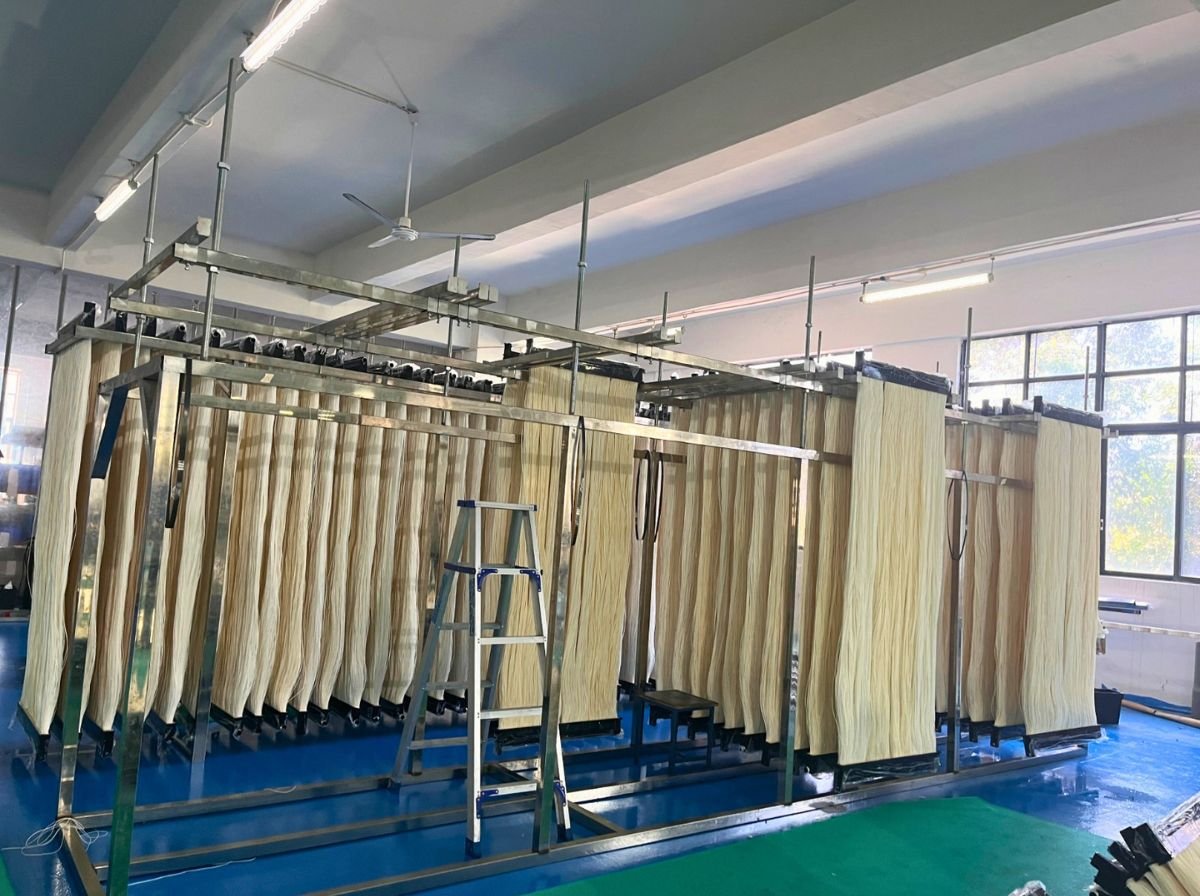
India's Leading MBR Membrane Manufacturing Facility
Our factory in Ahmedabad, Gujarat features automated spinning lines, pore-size verification equipment and pressure testing chambers.
Our engineering team tests and validates membrane configurations for specific textile effluent blends. We run pilot trials to ensure consistent operating flux.
Frequently Asked Questions
Clear technical answers from our membrane engineering team.
Ready to Upgrade Your Textile Wastewater Treatment?
Connect with our industrial filtration engineers in Ahmedabad. Get complete technical specifications, CAD layout templates and a detailed price proposal for your plant upgrade.